
What Happens During a Tarot Reading?
Curious about tarot readings? Learn what happens during a session, how the cards are interpreted, and why Spirit-guided readings often provide deeper clarity, validation, and understanding.
TAROT CARD READINGPSYCHIC READINGSPIRIT ENERGY
Donald Rumer-Rivera
7/14/20264 min read
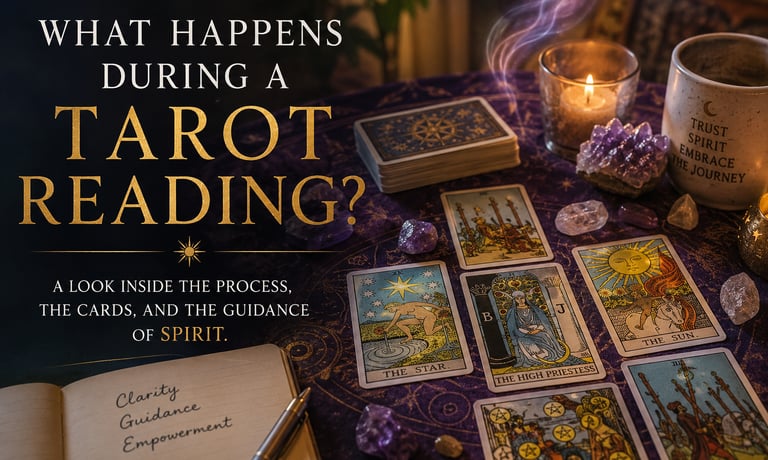
What Happens During a Tarot Reading?
By Don Rumer-Rivera
Psychic Medium • Tarot Reader • Former Attorney • Engineer • Author
If you've never had a tarot reading before, it's natural to wonder what actually happens during a session. Will the reader simply turn over cards and tell you what they mean? Will they answer your questions? Can the cards really provide insight into your life?
The answer depends somewhat on the reader, but most tarot readings follow a similar process designed to provide clarity, guidance, and a deeper understanding of the circumstances surrounding your life.
The Purpose of a Tarot Reading
At its core, a tarot reading is a conversation. The cards serve as a tool to explore situations, opportunities, challenges, relationships, decisions, and personal growth. Rather than predicting a fixed future, tarot helps illuminate possibilities and provides insight into the energies and influences surrounding a particular situation. Many people seek a reading when they are facing uncertainty, important decisions, relationship concerns, career questions, or simply a desire to better understand what is happening in their lives.
The Reading Begins With You
Most tarot readings begin with a brief discussion about why you have scheduled the session. Some clients arrive with very specific questions. Others simply know that something feels uncertain and are looking for guidance.
Common topics include:
Relationships
Career decisions
Finances
Family matters
Spiritual growth
Personal development
Life transitions
There is no right or wrong way to approach a reading. The goal is simply to establish an area of focus that allows the cards to provide meaningful insight.
Shuffling and Selecting the Cards
Once the focus of the reading has been established, the cards are shuffled and selected. The cards are then placed into a layout called a spread. Each position within the spread represents a different aspect of the situation being explored.
For example, certain positions may represent:
Current circumstances
Influences from the past
Challenges
Opportunities
Guidance
Potential outcomes
The arrangement of the cards helps create a framework through which the reader can interpret the messages being presented.
How Most Tarot Readers Interpret the Cards
For many tarot readers, the reading centers primarily on the traditional meanings of the cards themselves. Each card contains symbolism and imagery that have been studied and interpreted for centuries. Through training and experience, a reader learns these meanings and applies them to the client's circumstances.
For example:
The Star often represents hope and healing.
The Tower can indicate significant change.
The Hermit may suggest reflection and inner wisdom.
The Sun often points toward success and clarity.
These meanings form the foundation of the reading and can provide valuable guidance and perspective.
When Spirit Becomes Part of the Reading
While some readers rely primarily on the traditional meanings of the cards, others develop a relationship with Spirit that allows additional layers of information to emerge during a reading. More comprehensive card readers view the tarot spread as the starting point of the conversation rather than the entire conversation.
As the cards are revealed, Spirit may provide impressions, insights, feelings, symbols, images, phrases, or intuitive understandings that expand upon the message contained within the cards. Think of it this way, the cards may tell us what is happening while Sprit helps explain why it is happening. The cards could identify a challenge while Sprit reveals the lesson behind that challenge. The cards may indicate an opportunity while Spirit may can provide guidance on how to recognize or embrace it. This combination often creates a more personalized and meaningful reading experience.
What Makes a Spirit-Guided Reading Different?
Imagine two readers drawing the same card for two different people. A traditional interpretation might focus on the established meaning of the card. A Spirit-guided interpretation may include additional insights specific to the individual receiving the reading. This does not replace the meaning of the card. Instead, it adds depth, context, and personal relevance. Many clients find this approach helpful because it connects the symbolism of the cards to the realities of their lives in a way that feels both practical and meaningful. Both forms of reading are valid, and each has its place. It is up to the person receiving the reading to decide which form of reading they find most beneficial.
What Questions Can You Ask?
Tarot can be used to explore virtually any area of life. Some examples include:
What do I need to understand about this relationship?
What energy surrounds my career path?
What obstacle is preventing progress?
What lesson am I being asked to learn?
What should I focus on right now?
What opportunities am I overlooking?
The most productive readings often focus on gaining understanding and clarity rather than seeking simple yes-or-no answers.
What Happens After the Reading?
Many people leave a reading feeling more focused, validated, and empowered. Some gain a new perspective on a situation. Others receive confirmation about something they already sensed intuitively. Often, the greatest value of a reading comes from understanding the deeper influences at work and recognizing choices that may not have been obvious before the session.
Final Thoughts
A tarot reading is ultimately a tool for clarity, understanding, and personal growth. Whether the reader works solely with the cards or incorporates guidance from Spirit, the purpose remains the same: to help you better understand your situation and navigate your journey with greater confidence and awareness. The cards provide the language. Spirit provides the conversation. Together, they can offer remarkable insight into the questions and opportunities that matter most in your life.
About the Author - Don Rumer-Rivera is a psychic medium, tarot reader, attorney, real estate investor, former engineer, and founder of Sonoran Mystic Tarot. Through his books, articles, workshops, classes, and readings, he combines practical thinking with intuitive insight to help people gain greater clarity, confidence, and perspective on life's most important decisions. www.SonoranMysticTarot.com